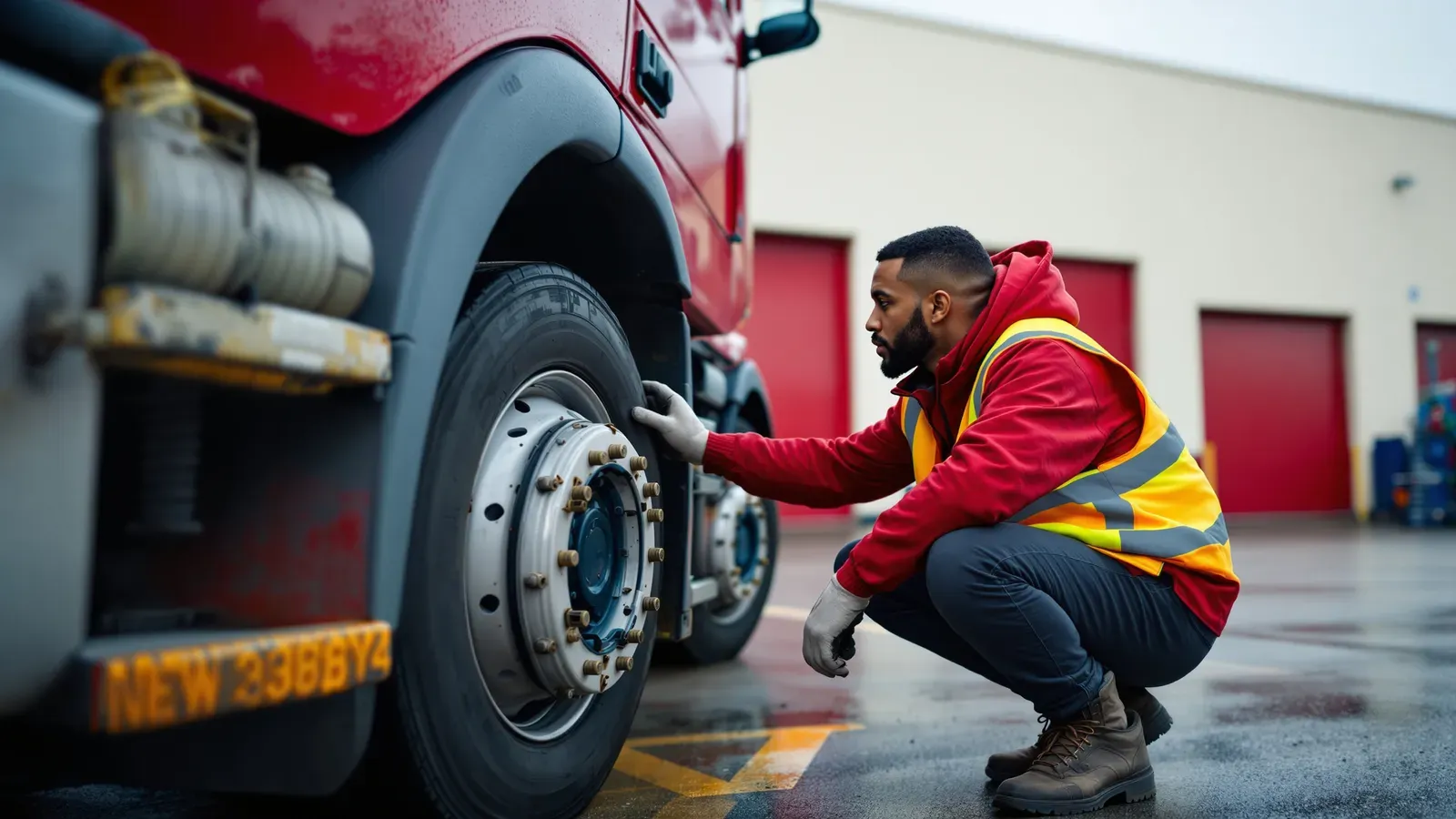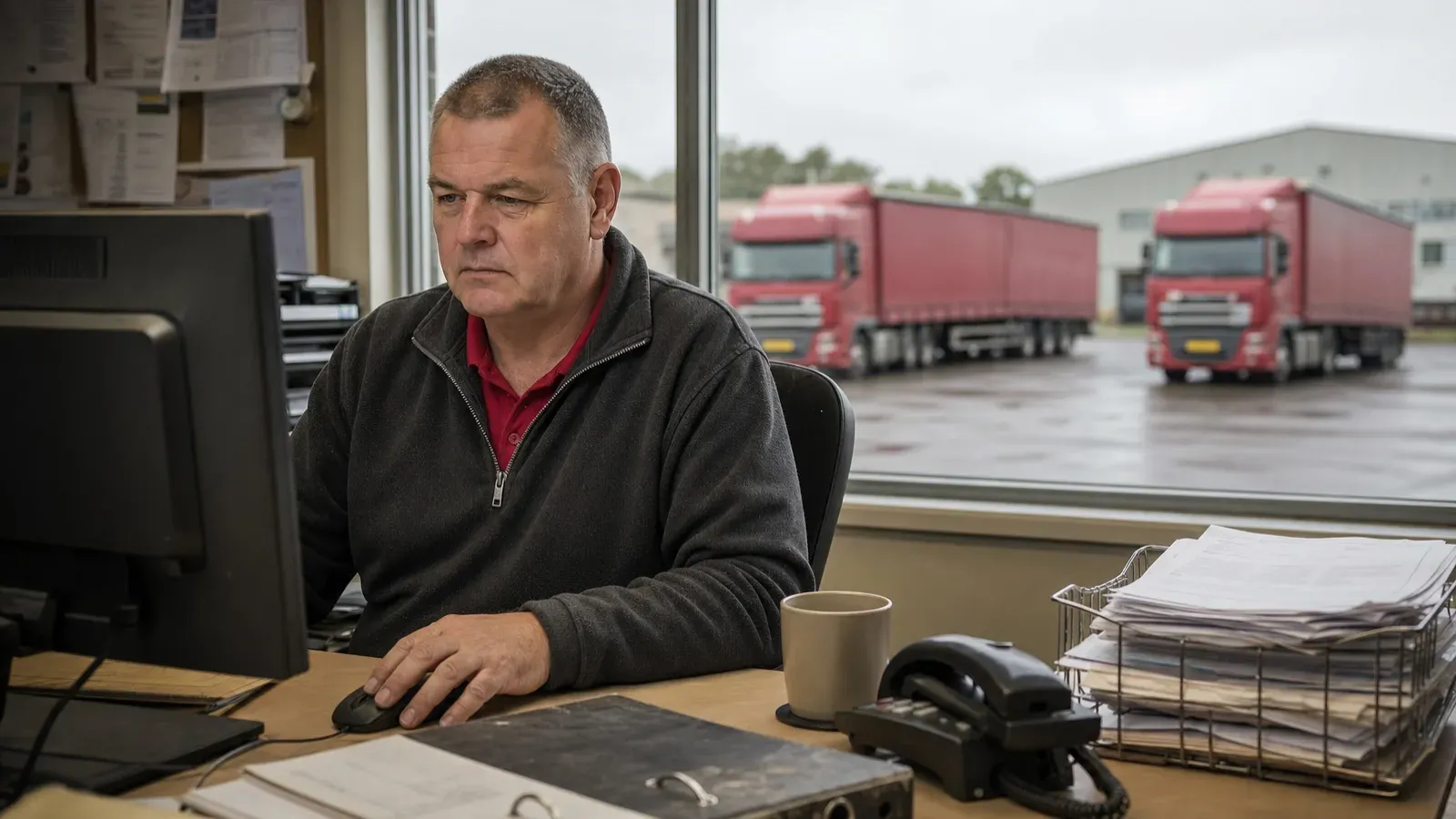

Every Transport Manager has rehearsed the moment: an auditor across the desk saying “show me”. Show me the walkaround records for that vehicle. Show me the defect and what happened to it. Show me the inspection history, the driver’s licence check, the hours. And in plenty of well-run operations, the honest answer lives in five places. A checks app. A workshop system. A tachograph analysis package. A licence spreadsheet on someone’s laptop. And a filing cabinet with the older paper.
Nothing in that picture means the operation is non-compliant, and DVSA does not require every record to live in one system. But scattered evidence makes control harder to demonstrate and slower to produce, and that is exactly the pressure DVSA Earned Recognition applies. Earned Recognition asks for both: compliant operations, and systems that continuously monitor and demonstrate that compliance. DVSA Earned Recognition is, at heart, an evidence-architecture question. This piece is about getting the architecture right.
What DVSA Earned Recognition actually is
Per DVSA’s published guidance, Earned Recognition is a voluntary scheme for operators who have held an operator licence for at least two years. You regularly share performance information with DVSA. In return, your vehicles are less likely to be stopped for inspection, and the scheme is designed to work for operators of all sizes. Accredited operators are listed publicly on GOV.UK, which helps operators demonstrate their compliance status when bidding for contracts. One scope note: the scheme and the guidance cited throughout this piece apply to England, Scotland and Wales.
The mechanics matter more than the badge. DVSA’s IT system requirements for the scheme are built around KPIs monitored through the operator’s own systems. They are reported on a four-weekly cycle, using the ISO week calendar, with data reported in arrears. Two evidence streams feed those KPIs: vehicle maintenance and drivers’ hours. The scheme requires DVSA-validated monitoring systems for vehicle maintenance and drivers’ hours, with the current validated supplier list published on GOV.UK. For vehicle maintenance, DVSA allows a range of arrangements: fully digital systems, mixed manual and digital records alongside validated reporting, or manual submission of maintenance and vehicle reporting information, provided the records meet the record-keeping rules below.
Where HaulierMagic sits, stated plainly. Earned Recognition validation is a specific DVSA accreditation for the systems that report maintenance and drivers’ hours KPIs to the agency, and HaulierMagic is not currently listed as a DVSA-validated Earned Recognition IT supplier. Its role in this picture is the one described below: consolidating the operational records the scheme’s audit examines, and supporting digital record keeping in line with DVSA guidance. For the validated reporting arrangements themselves, work from the live validated supplier list, and check every vendor’s claims against it, ours included.
The evidence the scheme examines, and where it usually lives
Before the KPI reporting ever starts, an approved auditor examines your systems against the operator standards. That means walkaround checks happening and recorded, defects reported, assessed and appropriately rectified, with roadworthiness confirmed where required before a vehicle returns to service, safety inspections completed at the stated frequency and fully signed off, licence and qualification records current, and hours managed. The retention rules underneath come from DVSA’s Guide to Maintaining Roadworthiness. Safety inspection records and drivers’ defect reports, with their rectification work, must be kept for at least 15 months. Electronic records are fully acceptable provided they are complete, tamper-proof, date-and-time stamped and carry a clear end-to-end audit trail. Nil-defect reports are recommended for retention for at least three months, as proof the checks are actually happening. And for Earned Recognition, the audit standards require documented evidence of an effective forward-planning system covering at least six months.
The evidence register — five streams, where they live today, and the rule each must satisfy
| Evidence stream | Where it typically lives today | The rule to satisfy |
|---|---|---|
| Daily walkaround checks and nil reports | Separate checks app, or paper books in trucks | daily + ~3 months — Recorded every day in service; nil reports kept around 3 months (recommended) |
| Defect reports and rectification | Checks app plus the workshop’s own system | 15 months+ — Kept at least 15 months, each defect linked to its assessment and fix |
| Safety inspection records | Workshop or maintenance provider files | 15 months+ — Kept at least 15 months, fully completed and signed off |
| Driver licence, CPC and qualification records | A spreadsheet, a folder, or HR | current — Current, checkable, and producible on request |
| Drivers’ hours and tachograph data | Tachograph analysis package | dvsa-validated — DVSA-validated system for the scheme’s KPI reporting |
Five streams, four or five homes. Each home is individually defensible; the DVSA Earned Recognition audit risk is the joins. A defect recorded in one app and rectified in another with nothing linking them. A licence spreadsheet updated when someone remembers. Evidence that exists but takes a morning to assemble makes demonstrating that control harder than it needs to be.
Consolidating the operational evidence
The fix is not heroics before the audit; it is deciding, once, where each stream lives, and collapsing the operational streams into the system that already runs the work.
Checks and defects belong with the jobs. When the driver’s daily walkaround runs through the same app that holds their jobs and PODs, the Driver App in HaulierMagic’s case, the check is recorded against the vehicle with its date and time as part of the operational record, and an inspection record exists for the vehicle check. A defect raised in the same place is a defect whose assessment and rectification can be shown alongside it. That is exactly the join auditors probe.
Resource records belong with the resources. Driver, vehicle and trailer files, with their qualification and compliance records held against them, sit in the same platform that plans them. So the question “was this driver qualified for this work on this date” is answered by the system that assigned the work, not by cross-referencing a spreadsheet against a planning board.
Everything carries an audit trail. The Guide to Maintaining Roadworthiness is explicit that electronic systems must be tamper-proof, with records that cannot be changed later and a clear trail of who did what and when. HaulierMagic’s contribution here is a platform-wide audit log for data-changing actions, recording the user and timestamp, with before-and-after detail available in the activity trail. Test any vendor’s equivalent in the demo: change a record, then ask them to show you the trail of the change.
Drivers’ hours stay with the validated specialist. Honesty from us on the boundary: HaulierMagic is not a tachograph analysis package and does not run a full tachograph compliance engine. Your hours evidence and that half of the scheme’s KPI reporting belong with a validated drivers’ hours system, connected into your process rather than wished into your TMS. Any TMS vendor who blurs that line is telling you something useful about their other claims.
Working towards the audit
With the homes decided, DVSA Earned Recognition readiness becomes routine rather than a project. Run the retention clock deliberately. An auditor can look back 15 months, and those records do not all have to sit in one new platform: older records can remain archived and producible behind the current system. But the longer your consolidated system has been the record, the less assembling the look-back takes, which is the operational argument for consolidating early rather than the quarter before you apply. Review your own evidence monthly, the way an auditor would. Pick a vehicle and pull its checks, defects, rectifications and inspections end to end. Any join that relies on a person’s memory, or makes records difficult to trace across systems, is a weakness in the architecture. Keep the maintenance planner running at least six months ahead, per the guide, so inspection scheduling is evidence of control rather than a scramble. And if the audit is a year or more away, fold the evidence question into your wider transport management system decisions. It belongs on the requirements list alongside planning and invoicing, as we argue in our case to the consolidation-minded Transport Manager.
A strong position going into DVSA Earned Recognition is having evidence that lives where the work happens, in systems built to show it, so “show me” has a five-minute answer. Get the architecture right and the badge becomes a by-product of how the operation already runs. Get it wrong and no amount of diligence assembles itself in time.
DVSA Earned Recognition: what operators ask
Is HaulierMagic a DVSA-validated Earned Recognition IT supplier?
No. As of publication, HaulierMagic is not listed as a DVSA-validated Earned Recognition IT supplier; validation is a specific accreditation for the systems that report the scheme’s maintenance and drivers’ hours KPIs, and the definitive, changing answer for any supplier is the live list on GOV.UK. HaulierMagic’s role is consolidating the operational evidence the audit examines, checks, defects, inspections and resource records, and supporting digital record keeping in line with DVSA guidance, alongside your validated reporting arrangements.
Can we run Earned Recognition on paper records?
Partly. The roadworthiness rules accept paper, electronic or mixed record keeping, and maintenance evidence behind the scheme can still involve a blend of the two. What the scheme specifically depends on is appropriate IT and reporting arrangements for the KPI monitoring, so a paper-heavy operation should plan the reporting arrangement first and digitise the operational records at the pace that suits it. Moving checks, defects and inspections into an electronic system with a proper audit trail makes the evidence faster to produce either way.
How long before applying should we consolidate our records?
There is no DVSA rule requiring records to be consolidated at all, so treat this as operational planning rather than a prerequisite. The look-back window is 15 months, and older records can stay archived and producible behind your current system. The practical benefit of consolidating early, ideally a year or more before you want to be audit-ready, is that more of that window sits in one place, and you can run your own vehicle-by-vehicle evidence pulls until every join holds.
We are not applying for the scheme. Does any of this still matter?
Yes, because the core evidence duties are not unique to Earned Recognition. Inspection and defect records must still be retained for the required period, with defects linked to assessment and rectification, and where maintenance records are kept electronically DVSA also sets requirements around accessibility, audit trails and protection against later alteration. These duties bind every operator under the Guide to Maintaining Roadworthiness, scheme member or not, and they are what a DVSA examiner or Traffic Commissioner will test after any roadside encounter. Earned Recognition simply rewards operators whose architecture already shows it; the architecture is worth having either way.