

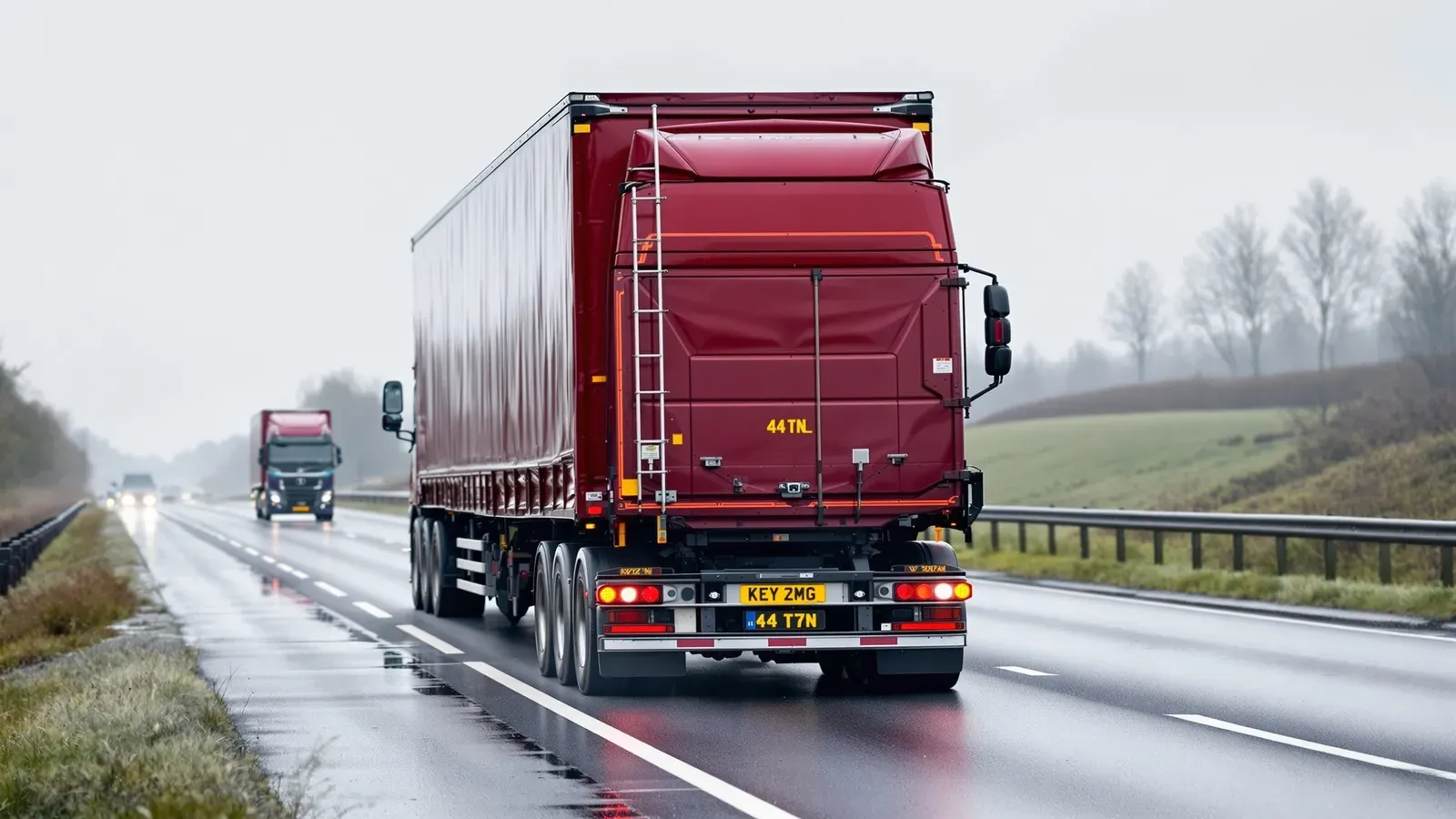
Most haulage rates in the UK are set the same way: you look at what you charged last time, add a bit, and hope the customer says yes. It works right up until the year your costs move faster than your prices. Then the invoices still go out, the trucks still run, and months later you find the work you fought hardest to win barely covered what it cost to do. That year was 2025. 2026 has been worse.
This is a practical guide to setting haulage rates. What a 44-tonne truck actually costs to run today, how to turn that into a rate per mile and a day rate, and what to watch in the second half of 2026. There is a calculator further down you can put your own numbers into. No email required.
Why haulage rates are under pressure in 2026
Two things have happened at once. Costs have climbed, and diesel has gone through the roof.
The RHA’s Haulage Cost Movement 2025 survey, published in December 2025, put the increase in operating costs excluding fuel at 5.91% year on year. Margins across the sector sit at around 2%. Employment costs alone rose 6%. Members told the RHA what they have said for three years running: costs are outstripping haulage rates, and some customers have not moved their prices since 2019.
Then came the fuel. According to the Department for Energy Security and Net Zero’s weekly road fuel prices, average UK diesel sat at 140.72p a litre in the week of 9 February 2026. By 13 April it had reached 192.14p. It has eased since, to 167.08p in the week commencing 20 July 2026, but that is still 26p a litre above the February low. Strip the VAT out and a haulier is paying roughly 139p a litre where the RHA’s cost model assumed 107.87p.
On one 44-tonne artic running the RHA’s median 75,000 miles a year at 8.3mpg, that gap is not small.
That is close to £13,000 a year, on one truck, on fuel alone. Across ten trucks it is £129,000. If your haulage rates have not moved since February, you have absorbed all of it.
None of that makes haulage rates unwinnable. It makes guesswork expensive.
Start with your true cost, not the market rate
The most common mistake with haulage rates is quoting what you think the market will bear, then finding out at year end whether it covered the bills. The order needs reversing. Work out what the truck costs. Decide what margin you want on top. Then find out whether the customer will pay it. If they won’t, that is useful information: the job is not worth doing, not that you should do it cheaper.
The RHA’s model for a 44-tonne artic and trailer gives a solid starting shape. It puts annual costs at £165,822 excluding fuel and AdBlue, and £211,180 including them. Here is where that money goes.
Two things stand out. Diesel is only a fifth of the bill, so haulage rates built on fuel alone will be wrong. And the driver is the biggest single line at nearly a third. Every pay rise has to find its way into your haulage rates, or it comes straight out of margin.
How to work out your cost per mile
Rebuild the RHA model at today’s numbers and you get a usable benchmark. Note that one line has moved in your favour: from 1 July 2026 most HGVs pay a temporary £1 rate of vehicle excise duty when they renew, running to 30 June 2027. The HGV levy is still payable, so a Euro VI 44-tonner now pays £620 for the year rather than the £1,177 in the RHA model.
One 44-tonne artic and trailer. 75,000 miles a year and 8.3mpg (RHA 2025 median and model figures). Diesel at 139.2p a litre ex VAT, derived from the DESNZ pump average of 167.08p for the week of 20 July 2026. All costs other than diesel taken from the RHA 2025 model, with road tax replaced by the £620 VED and levy figure. 220 chargeable days a year. Empty running at 30%. These are worked-example inputs, not UK averages. Your own figures will differ, which is exactly why you should run them.
| Line | Per year |
|---|---|
| All costs except diesel (driver, overheads, depreciation, maintenance, insurance, VED and levy, AdBlue) | £166,310 |
| Diesel: 41,079 litres at 139.2p | £57,182 |
| Total annual cost, one truck | £223,492 |
Working for the largest line: 75,000 miles ÷ 8.3mpg = 9,036 gallons; × 4.54609 litres = 41,079 litres; × £1.392 = £57,182. Litres rounded to whole numbers, cash to the nearest pound.
Divide £223,492 by 75,000 miles and you get £2.98 per mile. That is the number most hauliers stop at, and it is the number that quietly bankrupts them.
The empty mile problem
You do not get paid for every mile you run. Department for Transport road freight statistics put empty running for articulated vehicles at 30%, and that figure has held steady for three years. If 30% of your mileage is empty, only 52,500 of those 75,000 miles are earning.
Which means your break-even is not £2.98 a loaded mile. It is £4.26. Quote £3.20 a loaded mile because it feels comfortably above cost, and you lose money on every job.
What the published guide rates actually mean
Search for haulage rates and the same range comes back everywhere: roughly £1.50 to £3.00 a mile, repeated across most of the first page. Before you price anything against it, be clear what that number is. It is a guide rate published by companies that sell haulage, written for the customers buying it. As a signal of what the market expects to pay, it is useful. As a benchmark for what you should charge, it is dangerous.
Two reasons. First, those ranges blend everything from a transit van to a 44-tonne artic, and they do not cost the same to run. Second, and more damaging, they are quoted per job mile, postcode to postcode. Your truck does not run postcode to postcode. It runs from wherever it finished the last job.
Here is what that does to a 200-mile load. At 30% empty running the truck covers 286 miles to deliver those 200, so it costs 286 × £2.98 = £851 to put on the road.
| You quote, per loaded mile | Revenue | Cost to run | Result |
|---|---|---|---|
| £1.60 | £320 | £851 | −£531 |
| £2.50 | £500 | £851 | −£351 |
| £3.00 (top of the published range) | £600 | £851 | −£251 |
| £4.26 | £852 | £851 | Break even |
Every rate in the published range loses money on that job. Quote £2.50 a loaded mile and you earn £1.75 for every mile the truck actually turns, against a break-even of £2.98. The rate looks healthy. The job is not.
This is not an argument that the market is wrong. It is an argument that a rate quoted per job mile and a cost measured per mile run are different units, and comparing them directly is how profitable-looking work turns into a loss. One more habit worth building: check the date on any rate guide you find. Several circulating this year were built on diesel prices that were already out of date when they were published.
How different haulage work is normally priced
There is no official UK haulage rate. What there is, is a set of conventions about how each type of work is usually structured.
| Type of work | Usually priced by |
|---|---|
| General haulage | Loaded mile |
| Trunking | Per mile |
| Dedicated vehicle | Day rate |
| Multi-drop | Base rate plus a charge per drop |
| Container work | Per movement |
| Contract work | Fixed rate, reviewed on a set cycle |
The structure decides how you present the price. It does not change what the truck costs. Whichever one you use, the number underneath it should come from your own cost model.
How to work out a haulage day rate
Plenty of UK haulage rates are set by the day rather than the mile: tipper work, contract hire, event work, anything where the truck is committed to one customer for a shift. The maths is the same. Only the denominator changes, from miles to days.
The trap is using calendar days. A truck does not earn on its PMI day, its MOT day, or the day the driver is on holiday and you have nobody to cover. Start from working weeks, then take out planned downtime. Forty-six weeks at five days gives 230; knock off ten for inspections and workshop time and you are at 220 chargeable days.
£223,492 ÷ 220 = £1,016 a day just to stand still. At a 10% margin, that is £1,129. And that assumes a full shift: the GB and EU drivers’ hours rules cap daily driving at nine hours, extendable to ten twice a week, so if your day rate quietly includes two hours of unpaid waiting at a delivery point, the customer is getting a discount you never agreed to.
Free haulage cost per mile and rate calculator
Put your own numbers in. Everything is prefilled with the worked example above, so you can change one input at a time and watch what it does.
Haulage rate calculator
Margin is taken on the selling price. Excludes VAT, tolls, ferries, congestion charges, subsistence and any job-specific costs, which should be added on top of the rate rather than absorbed into it.
If the result is further from what you currently charge than you expected, that is worth a conversation. We run a free 30-minute demo you can bring your own fleet numbers to, and you can book one here.
What a small pricing error costs across a fleet
On one truck, a few pence out looks like rounding. Across a fleet it is the difference between a good year and a bad one.
Ten trucks on the assumptions above run 525,000 loaded miles a year between them. So an error in your haulage rates scales like this:
- 10p a loaded mile too cheap: £52,500 a year
- 25p too cheap: £131,250 a year
- 50p too cheap: £262,500 a year
Now put that against what the sector actually earns. The RHA puts haulage margins at around 2%. Ten trucks cost roughly £2.23m a year to run, so a 2% margin is about £46,000 of profit. A 10p error on the rate is worth more than the entire year’s margin.
Nobody loses a fleet on one bad quote. They lose it on a slightly wrong rate, applied consistently, for a year.
Turning cost into a rate customers will accept
Knowing your break-even is half the job. Getting paid it is the other half, and that is where the structure of your haulage rates matters more than nerve.
Put a fuel mechanism in every contract
The RHA has said this for years, and it is still the highest-value clause in UK haulage. Separate fuel out and index it, so haulage rates adjust as the price moves instead of waiting for an annual argument. Diesel moved 51p a litre between February and April 2026. A rate schedule without a fuel clause is a bet you are not being paid to take.
Most advice stops at “apply a surcharge of nought to 15%”. That is the output, not the method. The method is four decisions:
- Fix a base price. The diesel price on the day the rate was agreed. Write it into the contract, not into an email.
- Fix the fuel share of the rate. Fuel is about 21% of what the truck costs to run, so roughly 20% of the rate you charge.
- Index it to something public. The DESNZ weekly average is free, published every Tuesday, and both sides can check it. Your own purchase price works too, but expect to be asked to prove it.
- Set a review period. Monthly is normal. Quarterly is too slow in a year when diesel moves 51p in eight weeks.
The surcharge is then the percentage change in fuel multiplied by the fuel share of the rate. If your base was 139.2p and diesel reaches 160p, that is a 14.9% rise; at a 20% fuel share, the rate moves 3%. Small, defensible, automatic.
It cuts both ways, and that is the point: when diesel falls, the customer gets the benefit without having to ask. That is what makes the clause acceptable in the first place.
Know what is coming on duty
Fuel duty is frozen at 52.95p a litre until 31 December 2026. Per HMRC’s amended fuel duty rates for 2026 to 2027, it then rises 3p on 1 January 2027 and a further 2p on 1 March 2027. That last 5p is worth about £2,050 a year on a truck burning 41,000 litres, or 2.7p a mile. If you are signing a twelve-month rate agreement this autumn, price it in now.
Charge for time as well as distance
Waiting time, tail-lift work, multi-drop, out-of-hours collections and weekend running all consume the same finite asset. Haulage rates that price distance alone give all of it away. Put each of these on the rate card as a chargeable item with its own price, agreed up front, so it appears on the quote and then on the invoice instead of being absorbed as goodwill. An hour at the gate is only free if you never wrote down what it costs.
Price the customer, not just the job
Two customers paying the same rate per mile are not equally profitable. The one who books late, keeps you waiting an hour at the gate, pays at 60 days and calls three times a day for an update costs you real money. Rank your customers by what they cost you to serve, not by what they turn over, and you will usually find the loudest account is the thinnest one.
Getting your haulage rates out of your head and into the system
Working the number out is one thing. Making sure the quote, the plan and the invoice all use it is another, and that is where most of the money leaks. No amount of arithmetic fixes it if your haulage rates live in a spreadsheet on one laptop while the person raising invoices works from memory and a scribbled note.
The pattern is familiar to anyone who has grown past ten trucks. Haulage rates get agreed on the phone and never written down. A price rise lands in March and reaches some customers but not others. Waiting time is recorded on the driver’s phone and never makes it onto the invoice. Nobody is being careless. There is just no single place the rate lives.
That is what a transport management system is for. In HaulierMagic, rate cards hold your haulage rates as postcode-to-postcode, point-to-point, per-mile, per-run and zonal pricing, with special location and vehicle-class rates on top. Change a rate and it can retro-update jobs you have not invoiced yet. The job carries its own price from the moment it is planned, so planning and invoicing work from the same number rather than two versions of it. Rate cards and automated invoicing are included in every plan, with figures published on the pricing page so you can cost it per truck before you speak to anyone.
Worth reading next: our take on the cost pressures squeezing UK hauliers, and why HaulierMagic is built UK-first.
Sources: RHA Haulage Cost Movement 2025 (published December 2025); DESNZ Weekly road fuel prices (week commencing 20 July 2026); HMRC Amended Fuel Duty rates 2026 to 2027; GOV.UK temporary £1 vehicle tax for HGVs and DVLA V149/1 rates from 1 July 2026; DfT road freight statistics. Figures in this article were checked against RHA, HMRC, DfT and GOV.UK publications in July 2026.